Saturday, October 4, 2014

Reproduction, Meosis & Comparison, Intro to Genetics

Sexual and Asexual Reproduction Videos:


Meosis Video:


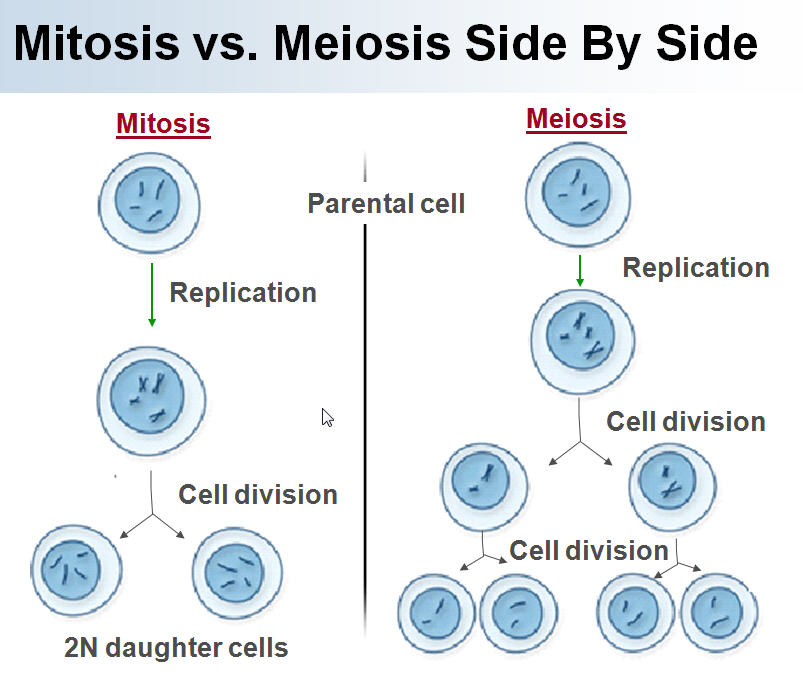
Mitosis vs Meosis:


Cell Division Quiz:

http://quizlet.com/41461126/cell-division-flash-cards/


Genetics:
http://quizlet.com/15513410/genetics-flash-cards/
Omit: Axial, terminal, filial,

Simplified notecards: https://quizlet.com/99472079/genetics-flash-cards/


Video:

Cell Division- Mitosis

Cell Cycle:


Mitosis: Video


Tuesday, September 23, 2014

DNA and RNA, Replication, and Protien Synthesis

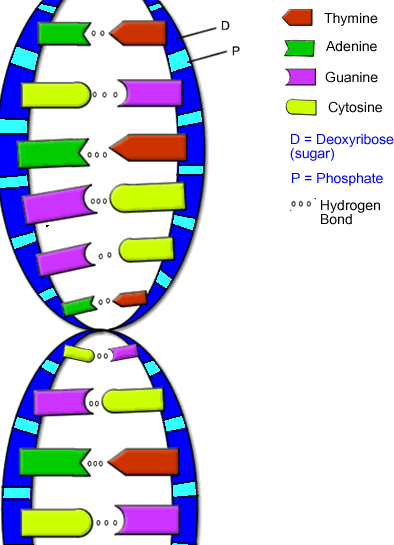
Structure of DNA

Key Vocabulary:

Replication
Synthesis
Complementary
Template
Mutation

Compare/Contrast DNA & RNA


DNA Replication Process:


Protein Synthesis:


Tuesday, September 2, 2014

Macromolecules and Properties of Water


Macromolecule Comparison Chart        Organic molecules are based on CARBON.


Macromolecules,
Biomolecules,
Organic Compunds
Elements
*From the Periodic Table of Elements
Subunits
Monomers,
Building Blocks
Functions:
Why are they important?
Examples:
Where can we find them?
Test(s)
Carbohydrates
C,H,O
Carbon, hydrogen, oxygen
1:2:1 ratio
Ex:
C6H12O6
Glucose (simple sugar)
Carbohydrates are built by combining monosaccharides (simple sugars)
*Short-term energy storage
*Quick-release energy
*Starch
*Glycogen (liver)
*Sugars – glucose, fructose, sucrose
*Celluose – plant cell walls
Iodine: turns purple/blue in the presence of starch
Benedict’s Solution: turns copper in the presence of simple sugars such as glucose
Lipids: Fats
C,H, very little O
Carbon, hydrogen, very little oxygen
Fatty Acids
*Insulation: store body heat
*Protection: cell membranes
*Long-term energy storage
Fats
Oils
Waxes
Steroids
Cholesterol
Brown Paper Bag Test
Nucleic Acids
Found in the cell nucleus
C,H,O,N,P
Carbon, Hydrogen
Oxygen, Nitrogen
Phosphorus
Nucleotides
made of:
1) Nitrogen base
2) Sugar compound
3) Phosphate group
Store and transmit genetic information
DNA
Deoxyribonucleicacid
Sugar: deoxyribose
RNA
Ribonucleicacid
Sugar: ribose
None
Proteins
C,H,N,O,  P,S
Carbon, hydrogen, nitrogen, oxygen, phosphorus, sulfur
Amino Acids
*Joined by peptide bonds to form a polypeptide chain (protein)
*Change the rate of  chemical reactions (enzymes)
*regulate cell processes
*Give bodies structure
*Transport materials into and out of the cell
Ex: oxygen (hemoglobin)
*Enzymes
End in “ase”
* Hemoglobin
Biuret Test: blue solution turns violet in the presence of proteins or any molecule with peptide bonds

 Videos:
Song


Crash Course 


Properties of Water

Sunday, August 17, 2014

Cells

Key Vocabulary: Cell Organelles
Cell
Structure
Function
Organelles
Mitochondria
Cell Wall
Chloroplasts
Nucleus
Golgi Bodi
Lysosomes
Cytoplasm
Endoplasmic Reticulum
Rough Endoplasmic Reticulum
Ribosomes
Vacuole
Vocabulary Practice:
http://quizlet.com/33649467/cells-flash-cards/
Video: Cell Organelles -Structure and Functions


Cell Organelle Analogy


Key Vocabulary: Cell Membrane & Solutions
Active Transport
Endocytosis
Exocytosis
Passive Transport
Diffusion
Facilitated Diffusion
Osmosis
Protein Gate
Isotonic
Hypertonic
Hypotonic
Quizlet: Vocabulary Practice
https://quizlet.com/94651262/membrane-transport-flash-cards/  (copy & paste link)
Video: Cell Membrane and Transport


Key Names: (Name-Word Association)

Robert Hooke- Cells
Anton Van Leewenhoek- Microscope
Schwann (Think Swann)- Animinal
Schleiden- Plants
Luis Pasteur- Broth
Francisco Redi- Red Meat (Spantaneous Generation)
Virchow- Dividing/Pre-Existing Cells


Pro vs Eukaryote Comparison (Interactive Video):
http://www.pisgahscience.com/holmescc/module4/pro_eukar.swf


Cell Analogy Prezi:
http://prezi.com/gc7ffe96ptqt/cells-organelle-analogies/


Sunday, August 10, 2014

Intro to Scientific Method


Key Vocabulary Words:
http://quizlet.com/46034370/the-scientific-method-1-flash-cards/

Links to Practice:
Parts of the microscope:
http://www.biologycorner.com/microquiz/index.html#
http://www.purposegames.com/game/a19f404ad4

Scientific Method Steps:
mnemonic device

Queen---question
Rachel---research
Hopes----hypothesis
Every----experiment
Coward--conclusion
gains-----graph(optional)
Courage--conclusion

7 Characteristics of Life
In order for organisms to be considered living, they must have ALL 7 characteristics of life.

acronym

Develop
Organize

Cells
Homeostasis
Evolve
Energy
Reproduce
Stimuli


Videos:
Independent Vs. Dependent Variables


Scientific Method Steps